Table of Contents
Keeping up with social media takes more than finding something to post. Small business owners have to make time for content while running their operations. Agencies manage multiple client calendars and brand voices.
Freelancers and creators juggle production with other responsibilities, while brand teams need to connect social activity to wider marketing goals.
The work adds up. You need relevant ideas, captions that sound right, visuals for different platforms, and a schedule you can maintain. Once a post goes live, you still need to understand whether it reached the right people and contributed to a meaningful result.
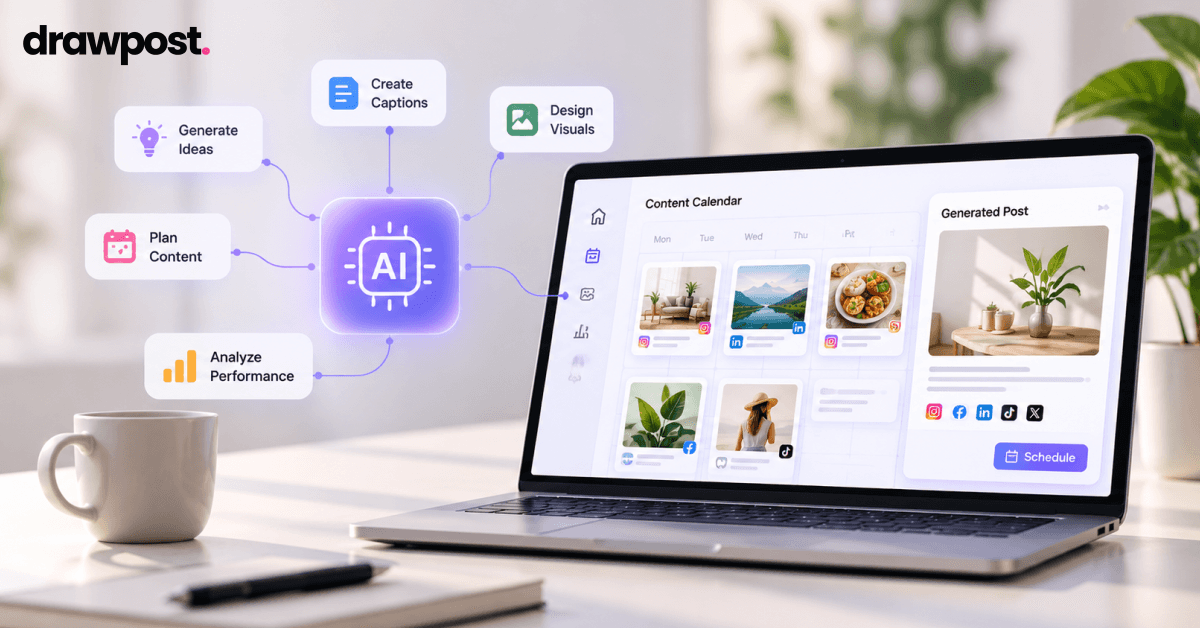
A well-planned AI social media content strategy can make that workload easier to manage. AI can help you find useful topics, develop content faster, and learn from performance data. The value comes from using AI where it saves time or helps you make a better content decision, whether you manage one brand or several client accounts.
Where AI Adds Value to Your Social Media Strategy
AI can help you decide what to publish, reduce the work involved in producing it, and learn which content supports your goals. Here are nine ways to apply it across your social media strategy.
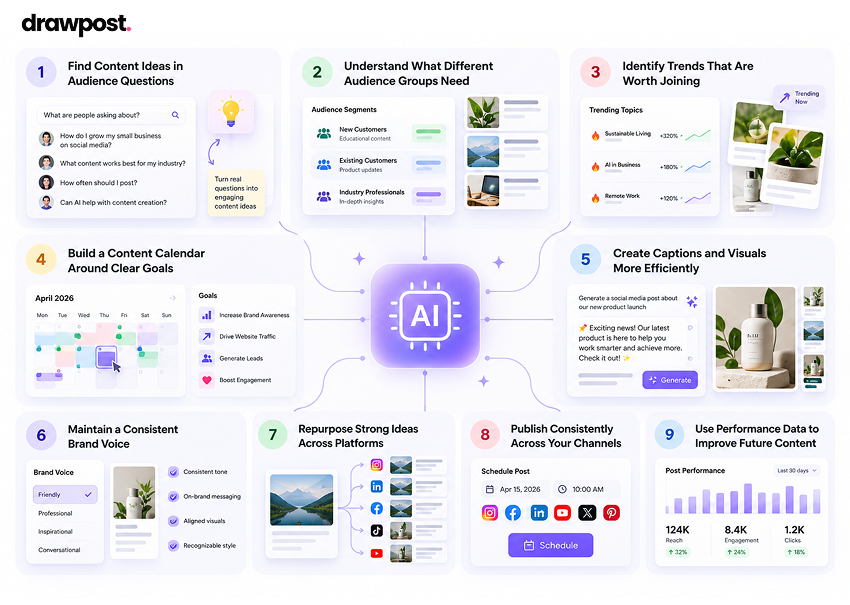
1. Find Content Ideas in Audience Questions
The questions people ask your business can tell you more about what to post than a list of generic content ideas. Look at customer conversations, comments, reviews, and sales inquiries for topics that come up repeatedly.
AI can help you group those questions into themes and suggest ways to address them. A single question can lead to several posts, each with a different angle or format.
For example, a fitness studio might regularly hear, “Which class should I try first?” That question could become a short video explaining what to expect or a carousel comparing class types. Both help potential members feel more confident about booking their first session.
This approach makes AI-driven content ideation more useful because it starts with an existing audience need. AI helps develop the idea, while your team supplies the experience that makes the answer relevant.
If you use customer feedback in an AI tool, remove personal or sensitive details and follow your business’s privacy requirements.
2. Understand What Different Audience Groups Need
People can follow the same account for different reasons. Some want practical advice, while others are comparing options or looking for answers before contacting your business.
AI can organize information from surveys, customer conversations, and audience research to help you identify those needs. The findings can shape content for different groups.
- New audiences may need an explanation of the problem your business solves.
- Prospective customers may want to see how your product or service works.
- Existing customers may look for advice that helps them get more value.
An agency could use this approach to plan separate content for a client’s prospective and existing customers. A brand team could use it to identify questions that its current content does not address.
Use AI-powered audience insights as a starting point. Check the findings against the original information and what your team knows about customers, especially when the sample is small.
3. Identify Trends That Are Worth Joining
Not every trend belongs in your content calendar. The useful ones connect to something your audience cares about and give your brand a reason to contribute.
AI can support social media trend analysis by helping you review recurring topics and competitor activity. Before acting on a suggested trend, consider:
- Audience relevance: Does the topic matter to your customers?
- Brand fit: Can you contribute useful advice or expertise?
- Timing: Is the conversation still active?
- Source: Can you verify the trend on the platform?
For example, a home décor brand could respond to growing interest in small-space living with a carousel showing practical ways to organize a studio apartment. The post joins the conversation while giving potential customers a reason to explore the brand’s expertise.
4. Build a Content Calendar Around Clear Goals
A content calendar helps you see whether upcoming posts support a campaign, answer customer questions, or promote an offer. It also reveals gaps before production begins.
AI-powered social media content planning can help you organize topics around those priorities. If a campaign aims to generate service inquiries, AI could suggest posts that explain the problem, answer buying questions, and show how the service works.
An agency managing multiple clients can use the same approach to build a separate plan for each account. Its team can then select the ideas that fits each client’s goals and available resources.
5. Create Captions and Visuals More Efficiently
Producing a post takes time. You need a clear message, an engaging opening, and a visual suited to the platform. AI for social media content creation can help you develop drafts and explore ways to present an idea.
For a product launch, a team might start with an approved brief and use AI to develop caption options and visual concepts. It can then select the strongest direction and add the details customers need.
Automated caption generation can help produce alternative opening lines and calls to action. Review each draft for accuracy and adjust the language so it reflects your brand.
6. Maintain a Consistent Brand Voice
When several people create content, brand voice can vary from one post to the next. That becomes more challenging for an agency or freelancer managing accounts with different audiences and styles.
Give an AI social media content generator clear context for each brand. Useful inputs include:
- Two or three approved posts that reflect its style.
- A description of the audience it wants to reach.
- Words, phrases, or claims your brand avoids.
Keep those instructions separate for each account. Then review drafts against the approved examples, particularly when a post includes a product claim or a sensitive message.
7. Repurpose Strong Ideas Across Platforms
A useful article, video, or webinar can support several social posts. AI can identify key points and suggest formats suited to different channels.
With social media content repurposing, a real estate agency could turn an article about preparing a home for sale into:
- A checklist carousel for prospective sellers.
- A short video explaining a common mistake.
- A post answering a frequent customer question.
The checklist gives sellers a useful starting point and introduces the agency before they are ready to request a valuation. Each post should work on its own while keeping the original advice in context.
8. Publish Consistently Across Your Channels
Once content is ready, scheduling helps you move approved posts into the right channels without handling each deadline manually. This is useful when you manage several accounts or work with clients who need to review content before it goes live.
AI social media management tools can bring content creation and scheduling into one workflow. An agency can prepare client posts for approval and schedule them in advance. A small business owner can review a batch of content at once and set publication dates for connected channels.
Leave time to monitor responses after publishing. Scheduled content can start a conversation, but your audience may still need answers from your team.
9. Use Performance Data to Improve Future Content
The most useful performance review starts with a question: Did this post support its goal? A post designed to build awareness may be measured by reach, while a service promotion may be better judged by relevant website visits or inquiries.
AI can organize social media performance analytics across topics, formats, and channels. It can help you compare which posts brought visitors to a service page and which generated inquiries, provided that data is available.
For example, if two posts promote the same service, compare their results. One may use a customer example while the other explains a feature. The comparison can suggest an angle to test in a future campaign, though it will not prove which element caused the difference.
Account for factors such as paid promotion and timing. Look at results across several comparable posts before deciding where to focus your next campaign.
How to Use AI for Social Media Content Planning
A useful content plan connects each post to an audience need and a business goal. If you are deciding how to use AI for social media content planning, start with one campaign or a month of content. Give the tool clear direction, then review its suggestions against what you know about your audience.
1.Set Your Goal and Content Direction
Start by defining your main social media goal, such as increasing brand awareness, generating inquiries, or driving sales. A small business may want more inquiries about a service, while an agency may need to support a client’s product launch.
Give AI that goal along with details about the audience, offering, and key messages. This helps AI suggest relevant topics and content ideas tailored to your audience and social media goals.
2. Turn Selected Ideas Into a Calendar
Choose the ideas that fit your priorities and organize them around campaign dates and available resources. Set a publishing frequency your team can maintain, and leave room for timely updates.
AI can help distribute the selected topics across the month. Your team can then adjust the plan based on what needs design, client approval, or additional information.
3. Prepare and Review Your Content
Use your brand guidance to develop captions and visuals for the selected posts. Keep the audience and purpose of each post visible in the brief so the message stays focused.
Before scheduling, check product details, links, and claims. If you manage client accounts, confirm who needs to approve the content and allow time for their review.
4. Use Results to Plan the Next Month
After publishing, review the results against the goal you set. If the campaign aimed to generate inquiries, look at the posts that brought relevant visitors to your website or encouraged people to contact you.
Use those findings to guide AI content optimization for social media. For example, if a post answering a buying question attracts relevant inquiries, explore related questions in the next month’s plan. Compare results over time before treating one post as a reliable pattern.
What Should You Look for in an AI Social Media Tool?
The right tool depends on where your social media workflow slows down. A small business owner may need help maintaining a publishing schedule, while an agency may need to manage several client accounts without mixing brand information.
When comparing AI social media management tools, look beyond the number of features. Consider how well each option supports the work your team does regularly:
- Brand context: Can you provide voice guidelines and visual preferences?
- Content formats: Does it support the types of posts you use?
- Publishing: Can it schedule content on your chosen channels?
- Review controls: Can you edit content before it goes live?
- Account management: Can you keep different brands and clients organized?
- Reporting: Can you review results that matter to your goals?
Also consider the cost of the plan alongside any limits on accounts, users, or content generation. A tool that looks affordable at first may become less practical if your team quickly needs more capacity.
Before committing, test it with a small campaign or a batch of posts. Compare the time spent on setup, creation, and editing with your current process. The result should help you decide whether the tool fits both your workflow and your budget.
Why Human Review Still Matters With AI
AI can produce content quickly, but it cannot take responsibility for what your business publishes. Your team still needs to verify claims and ensure each post reflects your products, services, and brand.
Pay particular attention to pricing and customer stories. Review testimonials carefully, and involve a qualified person when content covers topics such as health, finance, or legal matters.
This matters because AI systems can present incorrect information confidently. The National Institute of Standards and Technology describes this risk as confabulation, where generated content may contain false or inconsistent information. Check important claims against reliable sources before publishing.
How DrawPost Brings Your Content Strategy Together
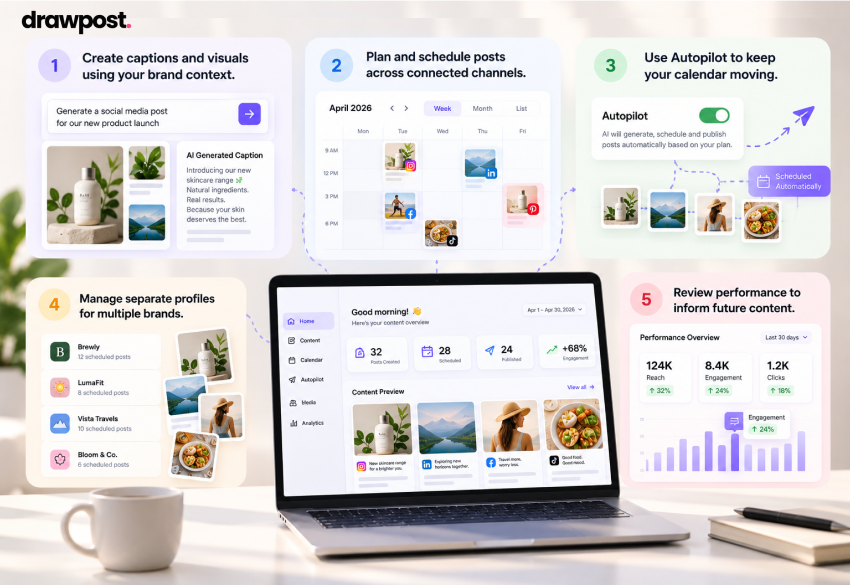
DrawPost is an AI social media manager that connects content creation, scheduling, and performance insights in one place. It helps businesses, agencies, and creators keep their social media active without managing every step across separate tools.
With DrawPost, you can:
✔ Create captions and visuals using your brand context.
✔ Plan and schedule posts across connected channels.
✔ Use Autopilot to keep your calendar moving.
✔ Manage separate profiles for multiple brands.
✔ Review performance to inform future content.
Start with a free plan and choose a paid option as your needs grow.
Ready to put your strategy into action?
Frequently Asked Questions
Q. How can AI improve your social media content strategy?
AI can help you find relevant topics, plan posts, create content, and review results. For example, it can group customer questions into themes or suggest formats for an upcoming campaign. This helps teams spend less time on repetitive work and more time refining their message. Your business still sets the goals and decides what is appropriate to publish.
Q. How can AI help generate social media content ideas?
AI can turn customer questions, existing articles, and campaign briefs into ideas for social posts. Give it context about your audience and explain what you want the content to achieve. It can then suggest different angles or formats for a topic. Choose ideas that address a real audience need and add your own experience before publishing.
Q. Can AI help identify trending social media topics?
Yes. AI can help identify recurring topics in the data available to it. Some social media tools also provide trend signals or track competitor content across supported sources. Check the source and timing before acting on a suggestion. The most useful trends are relevant to your audience and give your brand an opportunity to contribute something meaningful.
Q. How does AI improve social media content performance?
AI can organize performance data and help you compare topics, formats, or campaigns. You might discover that posts answering buying questions attract more relevant website visits than product announcements. Use that insight to plan a test, then review the results over time. Account for differences in timing, audience size, and paid promotion before drawing conclusions.
Q. What are the best ways to use AI in social media content planning?
Start by defining your goal and giving the tool information about your audience and brand. Use AI to suggest topics, develop a content mix, and organize selected ideas into a calendar. Review the plan against your campaign dates and production capacity. After publishing, compare the results with your goal and use the findings to plan future content.
Q. How can you use AI to create engaging social media content?
Give AI a clear brief that explains who the content is for and what you want them to take away. Ask it to suggest an opening, caption, or visual direction for a specific platform. Then add your own examples and expertise. Review the final post for accuracy and make sure it gives people a reason to read or respond.
Q. How can you use AI to analyze social media trends and audience behavior?
Start with the information your tool can access, such as performance reports, survey responses, or supported trend data. Ask AI to group recurring topics and identify patterns in how your audience engages. Check its findings against the original sources, especially when the sample is small. Use the results to choose topics or formats for your next campaign.
Our Latest Insights

How to Maintain a Consistent Brand Voice Across Social Media?
Learn how to maintain a consistent brand voice across social media with practical guidelines, platform-specific strategies, team workflows, and AI tools.
Top 10 AI Social Media Management Tools for Agencies in 2027
Compare the 10 best AI social media management tools for agencies in 2027. Explore features, pricing, pros, cons, and solutions for managing multiple clients.
How Small Businesses Can Automate Social Media Without Hiring a Full Team
Learn how small businesses can use AI and social media automation to create content, schedule posts, and grow online without hiring a full marketing team.