How to Create a 2027 Social Media Content Calendar in One Day with AI
Table of Contents
We’re approaching the end of 2026, and most businesses already have a reasonable idea of what they want to accomplish next year. The harder question is whether their social media content is ready to support those ambitions.
A product launch in March needs attention before its release date. Holiday promotions require creative work well ahead of November, while regular customer engagement has to continue between major campaigns. Without an annual plan, these activities compete for the same resources and often end up being handled at the last minute.
AI offers a more practical way to approach social media content planning for 2027. With the right business information and a focused working session, marketing teams can organize a full year of campaigns, establish monthly content themes, and map out a publishing schedule in one day.
The following approach will help you build a complete 2027 social media content calendar that connects your marketing priorities with what your audience actually wants to see.
Why Should Businesses Plan Their 2027 Social Media Content Now?
Consider how much of your 2027 marketing activity is already predictable. You probably know when major campaigns will launch, which products need attention, and where seasonal demand could influence customer behavior.
Yet social media planning often happens only a few weeks ahead. Teams develop content around immediate requirements while overlooking opportunities that need longer preparation.
An annual calendar makes those decisions easier to coordinate. A retail business can prepare summer campaigns before its competitors begin promoting them. A software company can introduce educational content ahead of a product release, giving potential customers time to understand its value.
Early planning also improves how marketing teams allocate their resources. Designers have greater visibility into upcoming creative requirements, while content managers can develop related posts together instead of working through isolated requests.
AI can reduce the amount of manual work involved in organizing these activities. Campaign information that would otherwise sit across spreadsheets and planning documents can be developed into a structured annual schedule, leaving marketers more time to refine the ideas themselves.
What Should Your 2027 Social Media Content Calendar Prioritize?
Before filling your calendar with post ideas, consider the business decisions that should influence what gets published.
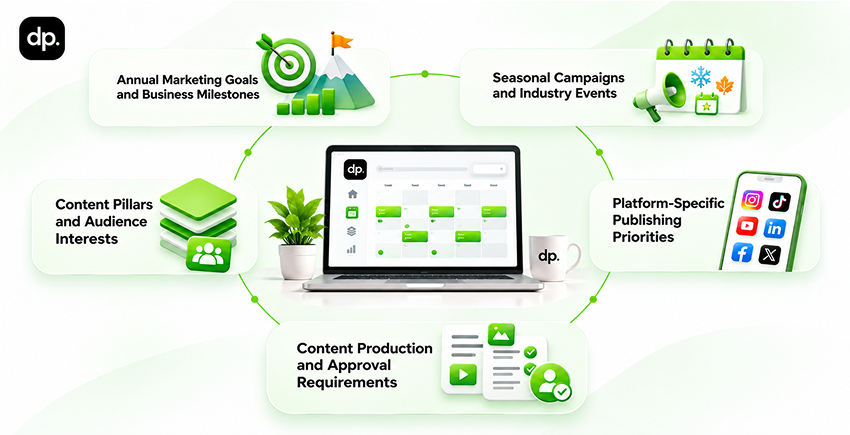
A useful annual plan needs to account for your marketing objectives and the resources available to deliver them. It should also reflect how your audience’s interests change throughout the year.
Annual Marketing Goals and Business Milestones
Begin with your confirmed business priorities for 2027. These could involve entering new markets, acquiring customers, expanding into another product category, or increasing revenue from existing customers.
Give each major initiative enough space in the calendar to build awareness before the intended action. For example, a software company launching a new product in May could begin discussing the problems it solves several weeks earlier.
Seasonal Campaigns and Industry Events
Include occasions that have a genuine connection to your customers. Consumer brands may build campaigns around seasonal purchases, while B2B companies can prioritize industry conferences and important buying periods.
Avoid filling the calendar with every available holiday. A relevant campaign supported by useful content will generally serve your business better than a promotional post created simply because a date is approaching.
Content Pillars and Audience Interests
Establish a few recurring themes that reflect what customers expect from your business. A software brand might combine practical product education with industry commentary and customer experiences.
These themes will guide content ideation throughout the year. They also help prevent the annual calendar from becoming overly dependent on promotions.
Platform-Specific Publishing Priorities
Review how each platform contributes to your marketing objectives. A LinkedIn audience may respond well to business insights, while Instagram may give a product-focused brand more opportunities for visual demonstrations.
Use previous performance to determine where your team should concentrate its effort. Maintaining a presence on every available platform is rarely necessary.
Content Production and Approval Requirements
Consider the work required before a post can go live. Video production may need several weeks, while a straightforward product announcement could be ready much sooner.
Build these lead times into your social media calendar planning. This gives campaign owners a realistic view of what can be delivered without compromising creative quality.
How to Plan Your Entire 2027 Social Media Content Calendar in One Day with AI
A full-year calendar may sound like a substantial project, particularly for businesses managing several channels. AI can make the initial planning process more manageable by organizing existing campaign information and developing content ideas around clear objectives.
The following eight-hour schedule is designed to produce a working annual calendar. It assumes your basic business information and marketing priorities are available, although individual teams may need more time for approvals.
| Planning activity | Time allocation | Expected outcome |
| Map annual marketing priorities | 45 minutes | Quarterly campaign roadmap |
| Identify 2027 marketing dates | 45 minutes | Relevant events and deadlines |
| Define monthly content themes | 60 minutes | Twelve monthly campaign directions |
| Generate annual content ideas | 120 minutes | Organized content idea bank |
| Set platform publishing schedules | 60 minutes | Channel-specific posting cadence |
| Build the annual calendar | 90 minutes | Structured yearly publishing plan |
| Review and prepare execution | 60 minutes | Approved planning framework |
| Total | 8 hours | Working 2027 calendar |
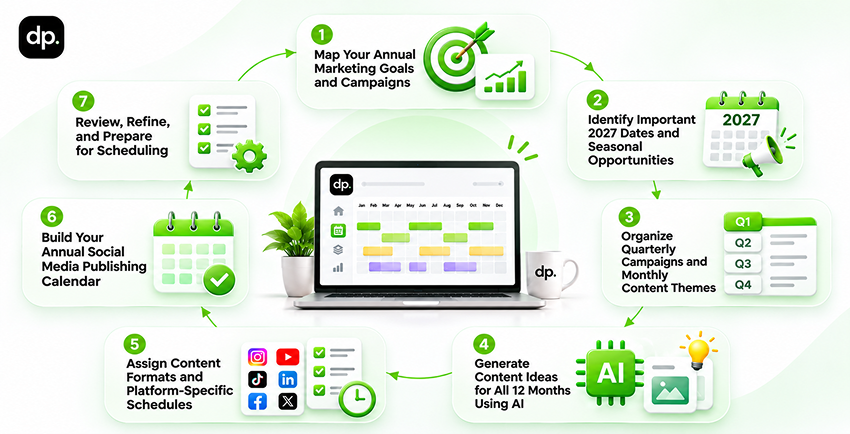
Step 1: Map Your Annual Marketing Goals and Campaigns
Start with your marketing roadmap rather than asking AI to invent a strategy for your business. Gather the campaigns already under consideration and identify their expected launch periods.
You can then use AI to organize those activities by quarter and highlight scheduling conflicts. For example, if two product launches are planned for the same month, the calendar may need additional educational content earlier in the quarter to give each launch sufficient attention.
Where campaign details remain uncertain, mark them as provisional. Your annual calendar should distinguish between confirmed business commitments and opportunities that still depend on internal decisions.
Expected outcome: A quarterly roadmap showing the campaigns that deserve the most attention during 2027.
Step 2: Identify Important 2027 Dates and Seasonal Opportunities
Once the major business activities are in place, identify the external events that could influence your publishing schedule.
AI can help compile potential dates based on your market and industry. However, verify specific dates through reliable sources before adding them to your calendar, particularly when event organizers have not finalized their schedules.
Evaluate each occasion according to audience relevance. Black Friday may warrant several weeks of preparation for an e-commerce business, while a professional services company might allocate more resources to an annual industry conference.
Include preparation deadlines for major events. This makes it easier to begin campaign production well before the planned publishing date.
Expected outcome: A verified annual events calendar with campaign preparation windows.
Step 3: Organize Quarterly Campaigns and Monthly Content Themes
Divide the year into quarters that reflect your broader commercial priorities. Then establish a monthly focus that supports the direction of each quarter.
Suppose a fitness equipment company plans a major product introduction in June. April could feature educational content about customer challenges, while May introduces the product’s applications. June would then focus on demonstrations and purchase-related questions.
AI can suggest additional monthly themes based on your content pillars and target audience. Review its recommendations against your actual marketing plans to ensure the calendar supports the business rather than following generic seasonal suggestions.
Expected outcome: Twelve monthly themes that connect individual posts with your annual objectives.
Step 4: Generate Content Ideas for All 12 Months Using AI
This stage is likely to benefit most from AI assistance. Once you have defined the monthly themes, you can generate a substantial collection of post ideas without researching each topic independently.
Work through the calendar one quarter at a time. Provide information about your audience and the campaign priorities for that period, then request ideas that address specific customer interests.
A B2B software company, for instance, could develop content around a common operational challenge before introducing the product designed to solve it. The same subject might support a short educational post early in the campaign and a detailed demonstration closer to launch.
Review the proposed ideas as you go. Remove repetitive concepts and replace generic topics with examples from your own business, particularly where customer experience or product knowledge can make the content more credible.
Expected outcome: An annual content idea bank organized by month and campaign.
Step 5: Assign Content Formats and Platform-Specific Schedules
The next decision concerns publishing frequency. Your calendar should reflect how much content your team can consistently produce and maintain.
A smaller business might begin with three LinkedIn posts per week, while an established consumer brand may require more frequent publishing across Instagram and Facebook. Neither approach guarantees better performance without considering the audience.
Ask AI to recommend suitable formats based on each content idea, then evaluate those recommendations against the production resources available. A short video may be appropriate for a product demonstration, while a customer question might be answered more effectively through a carousel.
Use existing performance data to guide scheduling decisions wherever possible. AI-generated recommendations can provide a starting point, but your audience’s behavior should inform the final publishing schedule.
Expected outcome: A channel-specific posting cadence with appropriate formats assigned to key campaigns.
Step 6: Build Your Annual Social Media Publishing Calendar
Bring your campaign roadmap and approved content ideas into one calendar. Each entry should explain what will be published and who is responsible for preparing it.
The calendar should also show how individual posts relate to broader marketing activities. Without this connection, even a well-organized publishing schedule can become difficult to evaluate.
A practical social media calendar template should include the following information:
| Calendar field | Information to include |
| Publishing date | Planned publication day |
| Social platform | Intended distribution channel |
| Campaign | Associated marketing initiative |
| Content theme | Topic or content pillar |
| Post concept | Central message |
| Format | Creative asset required |
| Call to action | Intended audience response |
| Content owner | Responsible team member |
| Status | Draft, review, approved, or scheduled |
At this stage, populate the full year with monthly themes and priority campaigns. Add more detailed post assignments for the first month, since those ideas will need to move into production sooner.
Expected outcome: A complete annual planning calendar with an actionable schedule for the upcoming month.
Step 7: Review, Refine, and Prepare for Scheduling
Spend the final hour reviewing your calendar from the audience’s perspective. Check whether the content provides enough useful information between promotional campaigns and whether similar topics appear too frequently.
Pay particular attention to the production schedule. A calendar that requires several videos to be completed in the same week may need adjustments, especially when your team is also managing other marketing activities.
Once the annual framework is approved, prioritize near-term content for production. AI-assisted tools can help create initial captions and develop visual concepts, after which your team can review the material and prepare it for publication.
Expected outcome: A year-round content plan that your marketing team can execute and update as 2027 progresses.
Your 2027 Social Media Content Calendar: Month-by-Month Planning
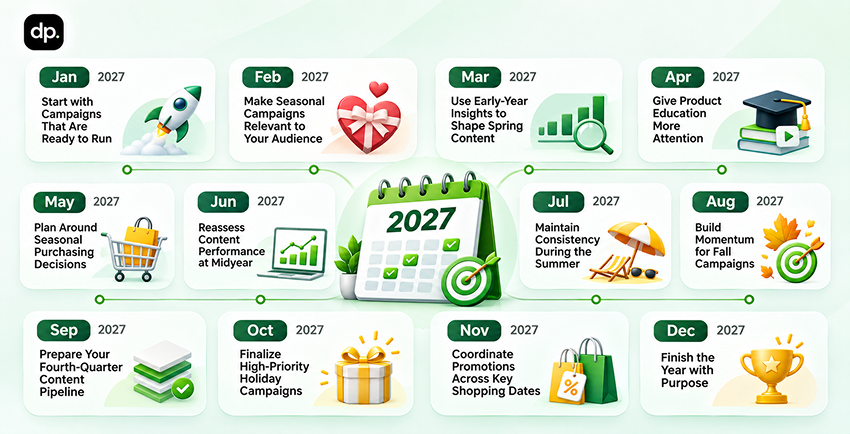
The annual framework becomes more useful when each month has a clear commercial direction. Seasonal events can inform your choices, although the relevance of those occasions will differ across industries.
The following month-by-month overview focuses on the US market and highlights where businesses may want to direct their attention during 2027.
January 2027: Start with Campaigns That Are Ready to Run
January should begin with content that has already been prepared in December. For many businesses, the opening weeks are an opportunity to introduce annual priorities and address customer needs associated with a fresh planning cycle.
SaaS companies can discuss productivity challenges that customers want to solve in the new year. Consumer brands may find opportunities around fitness goals or other seasonal interests, provided their products offer a meaningful connection.
Dates to consider: New Year’s Day, January 1; Martin Luther King Jr. Day, January 18.
Planning priority: Have January’s publishing schedule approved before the holiday break.
February 2027: Make Seasonal Campaigns Relevant to Your Audience
Valentine’s Day creates an established promotional opportunity for businesses in gifting and hospitality. Brands outside those categories can still participate when the occasion connects naturally with their customers, although a forced seasonal message is unlikely to add much value.
February also includes Black History Month, which may provide opportunities for thoughtful recognition or educational content. Such initiatives should reflect genuine commitments and be supported by relevant context.
Dates to consider: Valentine’s Day, February 14; Presidents’ Day, February 15; Black History Month.
Planning priority: Complete major creative assets during January, leaving February available for campaign execution.
March 2027: Use Early-Year Insights to Shape Spring Content
By March, your team should have enough recent publishing activity to identify which topics are gaining meaningful attention. Use that information to improve upcoming campaigns instead of relying entirely on assumptions made during annual planning.
For consumer brands, spring-related content may become more relevant as shopping patterns change. B2B companies can use the period to introduce research findings or address customer requirements emerging ahead of the second quarter.
Dates to consider: Women’s History Month; Easter Sunday, March 28.
Planning priority: Review first-quarter performance and prepare content supporting your April campaigns.
April 2027: Give Product Education More Attention
April presents an opportunity to strengthen customer understanding before the summer marketing season. Businesses can answer recurring questions and demonstrate how their products work in situations customers recognize.
Earth Day on April 22 may also be relevant for organizations with established environmental initiatives. Any sustainability-related content should describe verifiable activities rather than relying on broad claims.
Planning priority: Develop educational content that supports the products or services you intend to promote later in the quarter.
May 2027: Plan Around Seasonal Purchasing Decisions
Mother’s Day often influences shopping activity well before the occasion itself. Businesses planning related promotions should account for customer research time and delivery requirements when scheduling their posts.
Service businesses may have different priorities in May, particularly if their customers are preparing for summer activities or upcoming business changes. The calendar should reflect these needs without automatically introducing a holiday campaign.
Dates to consider: Mother’s Day, May 9; Memorial Day, May 31.
Planning priority: Align promotions with realistic purchasing timelines and make sure offer details are approved before publication.
June 2027: Reassess Content Performance at Midyear
June provides an opportunity to examine how the annual strategy is performing before committing additional resources to the second half of 2027. Compare the original campaign priorities with what customers have actually responded to.
A brand whose educational videos consistently attract qualified inquiries may decide to produce more of them. Another business could reduce effort on a platform that has generated little meaningful engagement, allowing its team to concentrate on stronger channels.
Dates to consider: Juneteenth, June 19; Father’s Day, June 20.
Planning priority: Complete a midyear content review and adjust the remaining calendar accordingly.
July 2027: Maintain Consistency During the Summer
Summer can affect customer routines and the availability of internal marketing teams. Preparing content in advance helps maintain publishing consistency when employees are taking time off.
July also gives retailers an opportunity to prepare for back-to-school campaigns. Businesses with longer sales cycles can continue sharing useful industry information while developing campaigns for later in the year.
Date to consider: Independence Day, July 4, with the federal holiday observed July 5.
Planning priority: Prepare August content early and confirm who will manage scheduled posts during staff absences.
August 2027: Build Momentum for Fall Campaigns
August is particularly relevant for brands serving students and families. Back-to-school purchasing varies by location, so businesses should consider regional school schedules before deciding when to publish promotional content.
For companies with a stronger fourth-quarter sales cycle, August is also a useful period for developing campaign concepts and identifying creative requirements. Early preparation gives teams more flexibility once the fall marketing season becomes busier.
Planning priority: Begin organizing fall campaign assets and confirm major promotional dates for the final quarter.
September 2027: Prepare Your Fourth-Quarter Content Pipeline
September is when businesses should begin turning year-end campaign ideas into confirmed production plans. Holiday promotions may still be several weeks away, but decisions about offers and creative direction can influence the quality of the eventual campaign.
For B2B organizations, the month may also support customer acquisition initiatives as companies review their remaining annual budgets. The calendar should reflect any known purchasing cycles or industry events relevant to the audience.
Date to consider: Labor Day, September 6.
Planning priority: Confirm November campaign requirements and assign production responsibilities.
October 2027: Finalize High-Priority Holiday Campaigns
October is the time to complete the creative work required for major November promotions. Retailers preparing Black Friday campaigns should have clarity around their offers and the audiences they intend to target.
Halloween can provide an additional opportunity for businesses whose products fit the occasion. However, regular content should continue alongside seasonal activity so the brand’s communication does not become entirely promotional.
Date to consider: Halloween, October 31.
Planning priority: Complete November content approvals before the busiest promotional weeks begin.
November 2027: Coordinate Promotions Across Key Shopping Dates
November contains several major US shopping events, making advance coordination particularly valuable for e-commerce businesses. A campaign can begin by introducing products and answering purchase-related questions before moving toward promotional announcements.
Customer service information also deserves attention during this period. Clear communication about offer terms and delivery deadlines can help shoppers make informed decisions while reducing avoidable inquiries.
Important dates:
- Thanksgiving – November 25
- Black Friday – November 26
- Small Business Saturday – November 27
- Cyber Monday -November 29
- Giving Tuesday -November 30
Planning priority: Review scheduled posts against final offers and inventory availability before campaigns go live.
December 2027: Finish the Year with Purpose
December content should reflect where customers are in the holiday buying cycle. As delivery deadlines approach, businesses may need to adjust their messaging or shift attention toward offerings that remain available.
The final weeks also provide opportunities to recognize customer relationships and share meaningful business developments from the year. Marketing teams can use this period to review campaign results and prepare January 2028 content before another annual planning cycle begins.
Dates to consider: Christmas Day, December 25; New Year’s Eve, December 31.
Planning priority: Prepare early-January posts before employees leave for the holidays.
How Can AI Turn Your Annual Calendar into Ready-to-Publish Content?
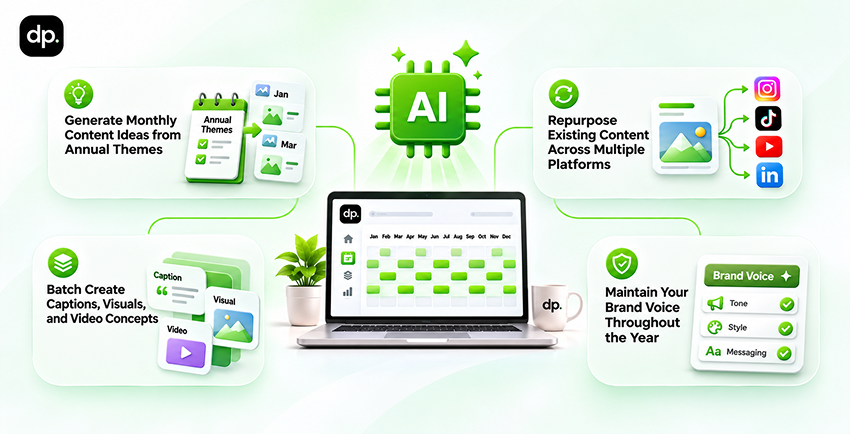
Once the annual calendar is complete, the next challenge is maintaining a reliable flow of content throughout the year. AI can support this work by turning approved campaign themes into specific creative assignments.
The most practical approach is to develop content in monthly batches. This keeps production manageable while giving your team opportunities to respond to changing customer interests.
Generate Monthly Content Ideas from Annual Themes
Begin each month with the campaign priorities already established in your annual calendar. Use AI to develop ideas that address the audience’s likely questions at that stage of the campaign.
For example, a product launching in September may require educational content during August. Once the launch is underway, the publishing schedule can move toward demonstrations and customer-focused examples.
Repurpose Existing Content Across Multiple Platforms
Your business may already have substantial material that can support upcoming campaigns. Case studies and previously published articles often contain useful information that can be adapted into shorter social posts.
AI can assist with content repurposing by identifying relevant information and proposing new formats. A detailed customer story, for instance, could become an Instagram carousel that highlights the original problem and the results achieved.
Each adaptation still needs editorial attention. Content intended for one platform should be reviewed for the expectations of another rather than copied without changes.
Batch Create Captions, Visuals, and Video Concepts
Content batching becomes particularly useful when several posts support the same campaign. Your team can develop related materials during one production session instead of repeatedly returning to the research stage.
An AI content calendar generator can help prepare initial post captions and visual concepts. These drafts provide a starting point for creative development, while designers and content managers retain control over the finished material.
Maintain Your Brand Voice Throughout the Year
An annual calendar may cover very different subjects, but customers should still recognize the business behind the content. A consistent editorial approach helps maintain that familiarity across changing campaigns.
Provide AI with clear information about your brand’s tone and the language it ordinarily uses. Include examples of successful past content, particularly when managing multiple brands with different audiences.
Which 2027 Social Media Dates Need Early Preparation?
Some campaigns require considerably more preparation than the date itself suggests. A Mother’s Day promotion may need to begin several weeks before May 9, particularly when customers require time to order personalized products.
The same principle applies to major retail events and seasonal campaigns. Your calendar should account for the full purchasing period, including when customers begin researching their options.
| Campaign opportunity | 2027 date or period | Suggested preparation |
| Valentine’s Day | February 14 | Begin in January |
| Mother’s Day | May 9 | Begin in March or April |
| Father’s Day | June 20 | Begin in May |
| Independence Day | July 4 | Begin in early June |
| Back-to-school | Regional schedules vary | Begin in June or July |
| Halloween | October 31 | Begin in August or September |
| Black Friday | November 26 | Begin in September or October |
| Cyber Monday | November 29 | Begin in September or October |
| Christmas | December 25 | Begin in October or November |
These preparation periods are starting points rather than fixed rules. A national campaign involving multiple creative teams may require a much longer lead time than a smaller business’s seasonal promotion.
Include deadlines for creative production and approvals in the calendar itself. The additional visibility helps campaign owners identify scheduling conflicts before they affect publication.
How Do You Keep Your 2027 Content Calendar Flexible?
A calendar prepared before January cannot anticipate every event that will influence your business over the following twelve months. Customer interests will evolve, and some campaigns may require adjustments as new information becomes available.
Build flexibility into the plan from the beginning. Keep your major commercial milestones visible, but avoid filling every publishing slot with content that cannot be changed.
A quarterly review provides an opportunity to assess whether the broader strategy still reflects business priorities. Monthly reviews can then focus on upcoming posts and recent performance data.
Reserve some publishing capacity for timely content. If your business announces a new partnership or receives a customer question worth addressing publicly, the team should be able to respond without disrupting an important campaign.
Use performance data to decide where future content deserves attention. A post that attracts qualified leads may be more commercially useful than one that generates a larger number of unrelated impressions.
How DrawPost Makes Year-Round Social Media Planning Easier
Developing a 2027 calendar gives your marketing team a plan to work from. The ongoing work involves turning that plan into publishable content and maintaining a consistent presence as campaigns progress.
DrawPost is built to support that execution. It brings AI-assisted content creation into a social media management platform where businesses can organize brand information and manage scheduled publishing.
Keep Content Aligned with Your Brand
DrawPost uses information from your website to help build an initial brand profile, which you can review and adjust. Details such as your target audience and preferred brand voice then inform the content generated for your business.
This is particularly useful when several campaigns share the same publishing schedule. Your marketing messages can change throughout the year while retaining a recognizable brand identity.
Turn Monthly Plans into Scheduled Content
DrawPost’s AI content calendar generator can create a month’s worth of captions and visuals based on your brand profile and publishing preferences. You can review the generated material before scheduling it across your connected social platforms.
The approach fits naturally with an annual content strategy. Establish the direction for all 12 months, then move individual campaigns through production and scheduling as they approach.
Manage Publishing with Less Manual Coordination
DrawPost includes a visual content calendar and automated publishing capabilities, helping businesses see what is scheduled and maintain a consistent posting cadence.
For agencies managing several clients, dedicated brand environments help keep each business’s messaging and publishing activity organized. Performance insights can also inform adjustments to upcoming campaigns.
Your 2027 calendar can establish the direction for the year. DrawPost helps turn that plan into the content your audience sees every month.
Ready to put your 2027 content calendar into action?
Frequently Asked Questions
Q. How Can AI Create a Social Media Content Calendar for 2027?
AI can organize your marketing objectives into quarterly campaigns and recommend monthly content themes based on your audience. It can also develop post ideas and suggest suitable formats for different platforms. To get useful results, provide the system with accurate business information and your preferred publishing frequency. Review the calendar before adopting it, particularly where campaigns depend on unconfirmed dates.
Q. Can You Plan an Entire Year of Social Media Content in One Day?
Yes, one working day can be enough to develop an annual planning framework when your business priorities are already established. AI reduces the manual effort involved in organizing campaigns and generating relevant ideas. However, completing the calendar does not mean every post is ready for publication. Most businesses will still need monthly production sessions and ongoing approvals as campaign details become clearer.
Q. Which Dates Should Businesses Include in Their 2027 Social Media Calendar?
Choose dates that reflect your audience’s interests and the way customers purchase your products or services. US retailers may prioritize Black Friday and other major shopping periods, while B2B businesses often benefit more from industry events or planned product announcements. Include internal milestones alongside public occasions. Check official sources before finalizing events whose schedules may change.
Q. How Can Businesses Turn Annual Campaigns into Monthly Content Plans?
Break your annual marketing priorities into quarterly objectives, then identify which campaigns should receive attention each month. Use those themes to develop post ideas and assign realistic publishing dates. For example, a planned product launch may benefit from several weeks of educational content before its announcement. Review each month’s schedule against the resources available for production and approvals.
Q. Can AI Generate and Schedule Social Media Posts for the Entire Year?
AI-powered platforms can generate content and support automated scheduling, although producing every post twelve months in advance may limit your flexibility. Product information and customer needs can change during the year. A more practical approach is to organize annual campaign priorities first and prepare approved content in monthly batches. This gives teams time to incorporate recent developments into future posts.
Q. How Often Should Businesses Review Their 2027 Social Media Content Calendar?
Review the overall strategy each quarter to confirm that upcoming campaigns still support your business priorities. Monthly reviews should focus on content performance and the production schedule for the following weeks. Teams managing frequent campaigns may also need shorter weekly check-ins. Use engagement data alongside meaningful business outcomes, such as qualified inquiries or conversions, when deciding which content deserves more attention.
Our Latest Insights
10 Social Media Management Mistakes Every Business Should Avoid
Discover 10 common social media management mistakes businesses make and learn practical ways to improve engagement, maintain consistency, and grow your brand.
AI Social Media Manager vs. Human Social Media Manager: Which Should Businesses Choose in 2027?
Compare AI and human social media managers in 2027, including capabilities, costs, benefits, limitations, and the best approach for businesses.

How to Manage Multiple Client Social Media Campaigns During the Holidays
Discover how marketing agencies can streamline multiple client social media campaigns during the holidays with workflows, batching, and automation tools.